
The freight market just crossed a threshold it hasn’t seen in more than three years: shipment volumes are growing again, and rates are rising right alongside them. Cass Information Systems’ August data shows the first positive year-over-year shipment growth after 42 straight months of decline, while truckload linehaul rates posted their steepest increase since 2022.
Add a stark Uber Freight warning about Q4 capacity, a volatile September spot market, record import volumes at the Port of Los Angeles, and lingering tariff costs on canned imports, and the picture is clear: shippers that haven’t locked in capacity for peak season are running out of room to wait.
Shipments Turn Positive for First Time in 42 Months
The Cass Truckload Linehaul Index jumped 11.3% year over year in August — the largest increase since June 2022 — while freight shipments rose 2.1% year-over-year, the first positive reading after 42 consecutive months of decline. On a seasonally adjusted basis, shipments climbed 5% sequentially. Expenditures, which include fuel, surged 18.7% year over year as diesel prices jumped 46% year over year and 10% sequentially.
Cass noted that “the much larger contract market is adjusting higher” even as spot rates showed only modest movement, underscoring how much of this rate pressure is now baked into long-term freight agreements rather than the spot board. With restocking underway and tariff refunds working through the system, Cass expects freight growth to continue, though at a modest pace.
Uber Freight Warns Shippers Running Out of Runway
Uber Freight has cautioned its shippers that the next six weeks are the window to secure capacity before conditions get worse. Truckload contract rates were already up 18% year over year in July, with national dry van linehaul at $2.39 per mile and spot pricing running 47% above year-ago levels. Tender acceptance improved to 78% in August from 76% in July, but remains well below the historical 90-94% range that shippers rely on for predictable service.
Driver supply keeps shrinking the pool of compliant capacity: more than 48,000 noncompliant drivers have exited the industry over the past year, and roughly 20,000 Mexican drivers lost U.S. visas between April 2025 and April 2026, tightening border markets like Laredo, Texas, where the load-to-truck ratio is running 61.9% higher year over year. Diesel hit $5.652 per gallon the week of August 24, its highest level of 2026 and 52.4% above a year ago.
Uber Freight’s advice is to use the relatively stable September-October window to lock in capacity before late-October peak volumes hit.
Volumes Dip But Spot Rates Refuse to Cool Off
The market gave an early preview of that Q4 volatility just after Labor Day. Truckload volumes dropped nearly 15% on September 9, yet the National Truckload Index spot rate held at $3.44 per mile, up 47% year over year, after peaking at $3.57 on September 6. Tender rejections eased to just above 14%, with van rejections at 12.35% but reefer rejections above 20% — 10 points higher than dry van — signaling real tightness in temperature-controlled capacity even as overall freight activity slowed.
Reefer spot rates hit $3.84 per mile all-in, and intermodal contract rates jumped 3.5% to $1.80 per mile as diesel climbed to $5.60 per gallon. Rates have continued to remain elevated, regardless of falling rejections and volumes. The takeaway for shippers is that even routine seasonal volume dips are no longer bringing rate relief.
LA Posts Record Summer as Peak Imports Arrive Early
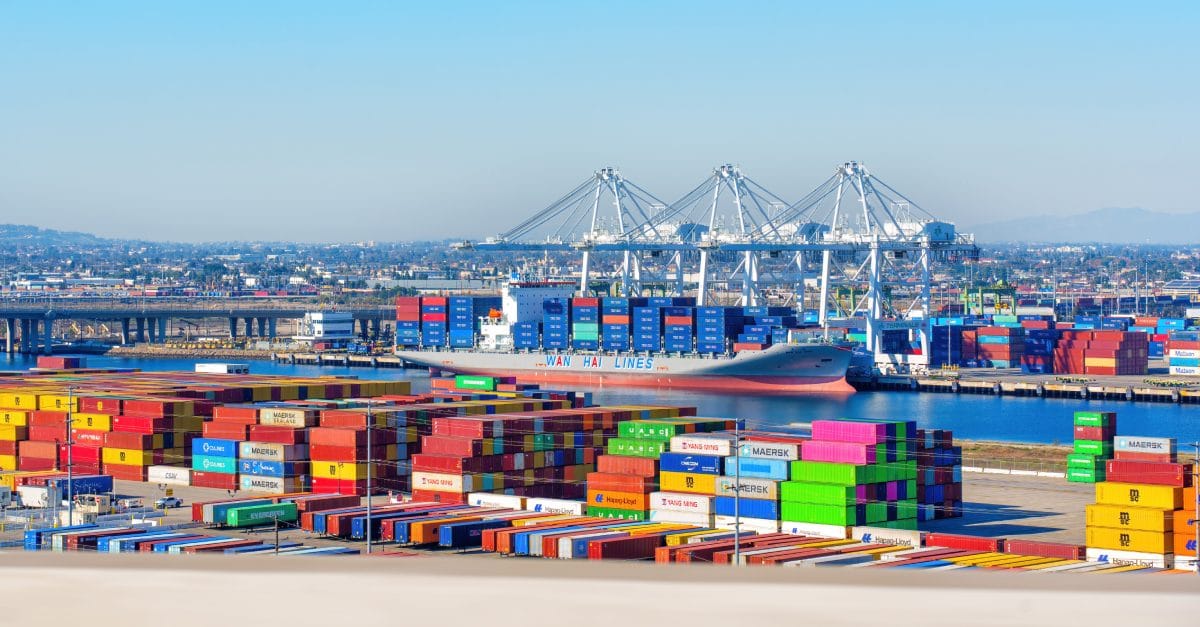
Import volume is backing up the capacity story. The Port of Los Angeles handled 955,907 TEUs in August, capping a record 2.9 million TEUs for the June-August quarter — 6% above the five-year average for the month. Year-to-date volume through eight months topped 7 million TEUs, up 1.5% from 2025. Loaded imports held flat year over year at 500,302 TEUs but ran 7% above the August average, while empty containers rose 4% as retailers turned equipment around quickly to keep goods moving.
Port Executive Director Gene Seroka credited an exceptionally strong summer driven by resilient consumer spending and retailers pulling holiday shipments forward, stating that September is shaping up to be another strong month. Much of this season’s holiday merchandise has already landed domestically, meaning the inland trucking network, not the ports, is now the bottleneck retailers need to manage.
Tariffs Keep Pressure on Beverage Supply Chains
Import cost pressure isn’t limited to general merchandise. The 25% tariff on imported canned beer and empty aluminum cans remains a live cost factor for beverage shippers, with cans representing roughly 40% of the more than $7.5 billion in annual U.S. beer imports. Mexico supplies the bulk of that volume at $6.3 billion, followed by the Netherlands, Ireland, and Canada, and importers including major international brewers have had to rework sourcing and packaging strategies to manage the added cost.
For beverage and CPG shippers, it’s a reminder that tariff-driven cost shifts are layering on top of — not separate from — the freight capacity crunch everyone else is navigating into Q4.
Ship Better with Zengistics
Demand is finally growing again, but it’s arriving into a market with less compliant capacity, higher fuel costs, and rates that no longer soften when volumes dip. Between Uber Freight’s direct warning, a record import quarter at the ports, and a spot market that shrugged off a 15% volume drop without giving up ground, the message for shippers is consistent: the next several weeks are the time to secure capacity and pricing before peak season removes the option.
Speak to one of Zengistics’ experts to build a freight strategy that holds up under a tightening, higher-cost market. Connect with us today.