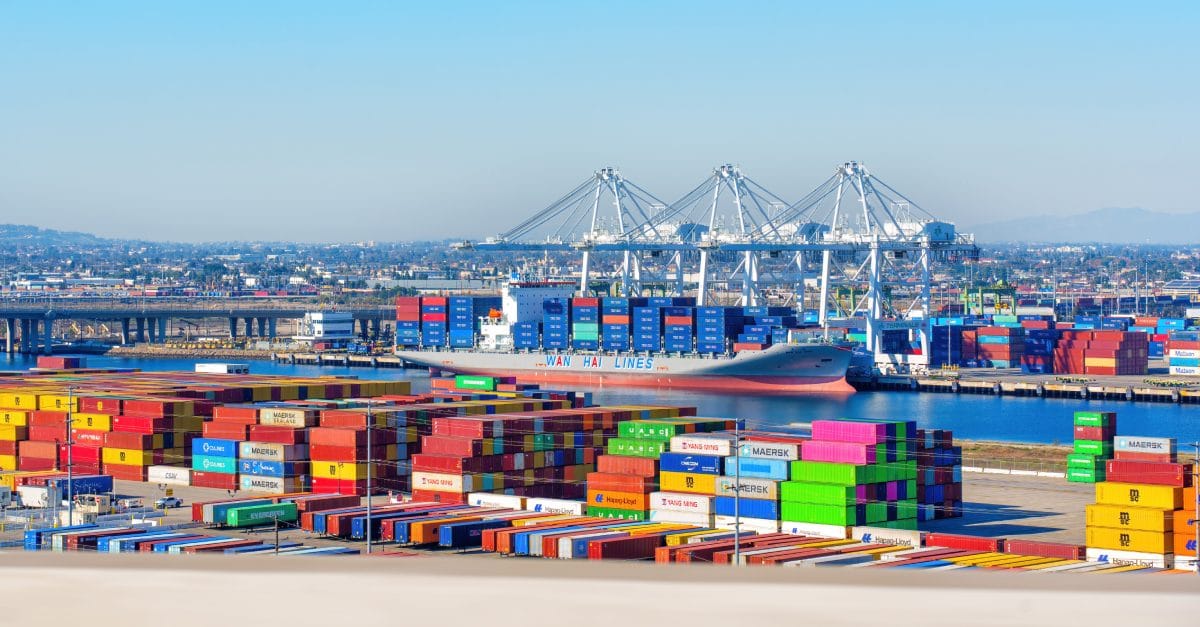

As the trucking sector records its lowest employment numbers in over more than years, the broader logistics ecosystem faces a quiet, uncertain start to 2026. Shippers are holding back on replenishment, manufacturers are pausing material orders, and container volumes are slipping. And some of this pullback is due to persistent inflation, tariff uncertainty, and weaker consumer momentum. Other forces are seasonal and include early-winter storms, compressed peak shipping windows, and post-pandemic recalibration.
This edition of our newsletter offers a clear view of what’s ahead and how shippers and carriers must prepare for volatility that may not let up anytime soon.
Trucking Employment at Lowest Level Since June 2021
Trucking jobs fell to 1,509,600 in November. That is down 4,400 from October and 13,800 below July’s recent high. This marks the lowest level since June 2021, and a 5% decline from the July 2022 record of 1,587,900 jobs. With revised September figures further sharpening the trend, Bureau of Labor Statistics data shows a sector that’s steadily contracting.
Arrive Logistics VP David Spencer pointed to regulatory pressure, particularly crackdowns on non-domiciled CDL holders and non-English-speaking drivers, as a trigger for workforce exits. He warned that this capacity thinning could lead to sharp swings in spot rates during seasonal surges.
Meanwhile, warehouse employment ticked up by 1,900 jobs after four months of decline but still trails year-prior levels. Rail and courier jobs continued to slide. Courier head count dropped sharply to 1,119,600, down nearly 18,000 from October, despite this typically being the peak season for parcel demand.
2026 Beginning with Weak Freight Demand
Freight demand is entering 2026 with no strong lift in sight. S&P Global and Moody’s forecast that container volumes will be flat or decline slightly. Truckload and LTL markets remain soft, and air cargo has declined year over year for six consecutive months. However, intermodal transportation continues to show resilience, with domestic and international volumes each up by more than 3% through October.
U.S. GDP is still expanding; 2.2% growth is forecast for 2026, but inventory trends are not following. Retailers remain cautious, with front-loaded imports tapering off and warehouse stockpiles rising. The Logistics Managers’ Index shows that carrying costs are climbing, discouraging restocking.
Consumer sentiment is fading, and manufacturing orders have reached a seven-month low. Port operators are adjusting in response to New York and New Jersey’s 2026 budget, assuming a 2% decline in container volumes.
Manufacturers Pull Back on Orders Ahead of Tariff Ruling
A survey by GEP and S&P Global shows North American manufacturers are cutting raw material and component orders, with purchasing demand in November falling to its lowest point since May. This is because businesses are awaiting clarity from the Supreme Court, which is reviewing the constitutionality of the Trump-era reciprocal tariffs.
These tariffs implemented under emergency powers are now being scrutinized for legal overreach. At the November hearing, justices showed skepticism toward the government’s position. GEP’s Mike DuVall said many buyers are “hedging” in anticipation of a rollback, creating a lull in activity.
North America’s supply chain activity index dropped from -0.45 to -0.53, compared to a global average of -0.29, signaling excess capacity and reduced factory usage. DuVall added that with demand soft, manufacturers may benefit from lower input costs going into the first quarter.
Spot Rates Surge With Snowstorms, Shorter Holiday Window
Truckload spot rates rose 4% in early December on the top 50 U.S lanes. It was the highest in any year since 2019 for the same period. The rate spike stems from severe winter weather in the Midwest and Northeast and a compressed peak shipping calendar due to the late-Thanksgiving holiday.
Wisconsin saw dry van rates jump 19 cents per mile, while Midwest-wide increases were 23% week over week. Interstate closures in Indiana and Pennsylvania further disrupted networks. In short-haul markets, rates between e-commerce hubs such as Allentown and Boston surged by 30 cents. DAT’s Dean Croke noted that 300-mile round-trip lanes, where drivers can return home the same day, were “red hot.”
Despite the spike, carriers view it as temporary. And some shippers are seeking early contract talks to avoid exposure later. Werner Enterprises CEO Derek Leathers reported more customers asking to lock in capacity sooner than usual to “de-risk” 2026 planning.
Smoother Freight Operations With Zengistics
At Zengistics, we focus on delivering the highest level of customer service, providing data-driven solutions, practicing proactive communication, and maximizing efficiency to drive scalable growth and provide personalized solutions that optimize your nationwide supply chain.
We leverage technology to offer:
- Tailored Transportation: Shipping solutions tailored to your unique needs.
- Visibility & Transparency: Live tracking and monitoring to enhance your ability to plan and manage your shipping needs on demand.
- Predictive Analysis: Insightful information you can leverage to optimize your entire logistics operation.
- Dynamic Route Optimization: Access to alternative routes to ensure your cargo arrives on time and in optimal condition.
Zengistics is the smarter option for getting logistics done more efficiently. Connect with us today.